/ Zero Trust Policy vs. Traditional Security Models
Zero Trust Policy vs. Traditional Security Models
As organizations push to the cloud, traditional security—rooted in perimeter-based defense—is proving inadequate in the face of modern cyberthreats. The zero trust model, based on continuous contextual verification, has emerged as the future of security. But how do these models differ in practical terms, and why is zero trust leading a revolution?
Evolving Paradigms in a Shifting Threat Landscape
The threat landscape is evolving rapidly. According to recent reports, ransomware incidents increased 17.8% year over year, alongside a 10.3% year-over-year rise in encrypted attacks. Meanwhile, 92% of organizations are concerned about unpatched vulnerabilities exposing them to malware attacks. Legacy security models are falling short on addressing these challenges, driving 81% of organizations to look toward implementing a zero trust strategy by 2026.
Traditional Security Models vs. Zero Trust
Traditional security strategies are based on implicit trust inside network perimeters, requiring users to connect to the network where IT resources reside. This approach relies on firewalls, virtual private networks (VPNs), and other tools to keep bad things out of the network and good things in. Once sufficient for securing on-premises operations, this model now struggles in a cloud-first, hybrid-work world with users, devices, and data far beyond the traditional network perimeter.
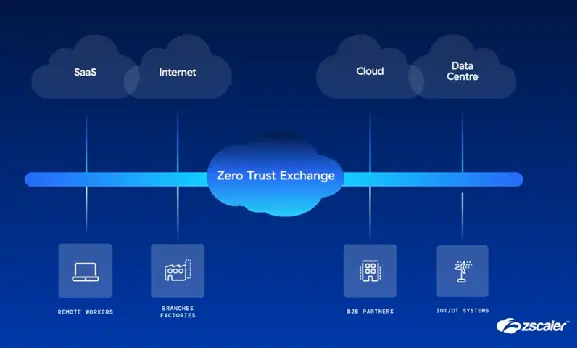
In contrast, zero trust’s key principle—never trust, always verify—decouples IT resource access from network access. It eliminates trusted zones, monitors activity in real time, and extends access directly to IT resources based on context and risk. Zero trust architecture is delivered as a service from the cloud, with policy enforced at the edge rather than a centralized data center. For modern organizations, this paradigm shift is essential for staying ahead of today's threats.
Shortcomings of Traditional Security Models
Traditional perimeter defenses, such as firewalls, fortify networks against attacks from outside while trusting users or devices inside. For anything to access anything else, both must be connected to the network. As part of this approach, remote employees use VPNs to connect to the network, similar to how branch sites and cloud apps must also have the network extended to them.
While this approach served its purpose well enough decades ago, it now carries serious weaknesses:
- Expanded attack surfaces: Traditional architectures comprising firewalls and VPNs have public IP addresses that cybercriminals can find and exploit.
- Encrypted traffic blind spots: Traditional tools struggle to inspect encrypted traffic at scale, allowing attacks to pass through defenses undetected.
- Lateral threat movement: Once attackers breach the perimeter and access the network, they can then access the IT resources connected to that network.
- Data loss: In addition to failing to block data loss via encrypted traffic, traditional tools are not designed to secure modern leakage paths like SaaS apps, BYOD, and more.
- Cost and complexity: Building and managing sprawling hub-and-spoke networks and castle-and-moat security models is incredibly complicated and expensive.
- Poor user experiences: Latency from backhauling traffic and routing it through security point products harms digital experiences and, consequently, disrupts productivity.
Understanding Zero Trust Policy
Zero trust policy is a radical departure from the assumed trust of legacy models. By treating every connection as a potential threat and continually verifying trust, it ensures that every interaction between any entity and any destination is secure.
Core Principles of Zero Trust
- Contextual verification: Every access attempt is authenticated based on contextual factors like user identity and location, device health, destination requested, risk, and more.
- Zero trust segmentation: Entities like users are connected directly to apps and IT resources—not to the network as a whole.
- Least-privileged access: Entities receive only the minimum access they need and cannot access unauthorized assets or the network.
- Real-time monitoring: Continuous monitoring identifies suspicious activity, enabling real-time response to emerging threats.
- Artificial intelligence: AI/ML enables constant contextual verification at massive scale, along with intelligent data protection, threat protection, and more.
Benefits of Zero Trust vs. Traditional Security Models
Zero trust delivers measurable benefits for organizations looking to secure, simplify, and transform their operations.
Secure
- Minimized attack surface: Eliminate public IP addresses and malicious inbound connections in favor of inside-out connections that hide the attack surface.
- No more compromise: Leverage a high-performance cloud that can inspect all traffic, including encrypted traffic at scale, and enforce real-time policies that stop cyberattacks.
- Prevention of lateral movement: Use zero trust segmentation to connect users to apps, not the network, preventing the abuse of excessive permissions on the network.
- Elimination of data loss: Stop data from leaking via encrypted traffic and any other leakage path, from sharing in SaaS apps to bring your own device (BYOD).
Simplify
Adopting zero trust architecture helps organizations streamline their infrastructure by replacing legacy tools such as VPNs, firewalls, and VDI. It also reduces dependence on costly MPLS by enabling secure private access over the public internet. This approach lowers technology costs and enhances operational efficiency, delivering substantial overall savings.
Transform
Zero trust architecture gives organizations the flexibility and simplicity to securely adapt to modern work styles, offering users fast, reliable, and secure access to resources from anywhere. It also enables them to adopt new cloud platforms and services without the need to backhaul traffic through data centers.
Real-World Use Cases
Countless organizations across industries have embraced zero trust to elevate their security and improve their operations.
Seattle Children’s Hospital inspects 100% of traffic without backhauling, improving visibility and the user experience.
Watch the video →
Hastings Direct replaced legacy VPNs, enabling employees to stay productive and secure while working from anywhere.
Watch the video →
AutoNation replaced 360+ branch firewall appliances with a complete cloud-based zero trust security stack.
Watch the video →
Siemens extended zero trust to 350,000+ employees in 192 countries, reducing infrastructure costs by up to 70%.
Watch the video →
Transitioning from Traditional Security to Zero Trust
Like any change, transitioning to zero trust can feel daunting—but it doesn’t have to. To simplify the process, Zscaler recommends a phased approach, based on four manageable steps:
- Secure your work-from-anywhere workforce
- Protect your clouds and the data within them
- Modernize your security for IoT/OT devices
- Provide third parties with secure access to apps
Get a closer look at key considerations and best practices: How Do You Implement Zero Trust?
How Zscaler Can Help
Zscaler delivers zero trust through the world’s largest security platform, the Zscaler Zero Trust Exchange. This cloud native platform seamlessly connects users, devices, and applications via business policies—across any network and from any location. Our unique approach enables you to:
- Minimize the attack surface
- Stop compromise in real time
- Prevent lateral movement of threats
- Block data loss across all leakage paths
- Scale protection as your business grows
- Provide great user experiences
- Reduce costs and complexity
As the leader in zero trust architecture, Zscaler has helped thousands of customers achieve fast, direct, and secure access to IT resources. If you're focused on protecting and enabling your organization's future, it’s time to accelerate your zero trust journey with Zscaler.
Ready to take the next step?
Sign up for Zero Trust 101, a recurring live webinar covering the basics of zero trust.
Zero trust focuses on securely connecting users directly to applications, while traditional models assume trust for anyone on the network and focus on protecting its perimeter. By governing access based on context and risk, zero trust ensures continuous verification, offering stronger security for today’s distributed environments.
Perimeter-based security struggles to protect modern environments with remote work and cloud adoption. Zero trust addresses these gaps by continuously verifying users and devices, enforcing strict access controls, and reducing attack surfaces. This shift helps organizations handle evolving threats in decentralized networks.
Zero trust mitigates insider threats through continuous identity verification and least-privileged access. Entities are connected directly to the apps they are authorized to access, and nothing else. Adaptive access controls detect and remediate risky changes in context and behavior in real time to ensure permissions are always strictly minimized.
Start by assessing your security posture and deploying technologies like multifactor authentication (MFA) and zero trust network access (ZTNA). Define granular policies based on user roles and device trust, and gradually expand zero trust through pilot projects.