To secure users and maintain strong data security and protection, you a need robust yet simple endpoint data loss prevention (DLP) solution that’s lightweight, unified, and browser-agnostic.
- Deliver a powerful centralized DLP policy everywhere
- Respond to incidents more quickly and efficiently
- Achieve and maintain regulatory compliance with ease

The Problem
Traditional endpoint approaches are broken
Legacy endpoint DLP greatly increases IT complexity, impedes the user experience, and creates significant gaps in policy. In our cloud-driven world, security teams can’t trust this kind of approach with sensitive information.

Complex policies
Deploying and maintaining an additional DLP policy drives up operational overhead.

Fragmented alerting
Traditional endpoint DLP engines classify data in silos and often conflict with other alerts generated across an organization.

Agent complexity
Adding yet another agent onto endpoint devices makes for a poor user experience.
Discover the difference: Zscaler DLP vs. Legacy DLP
Unlock your true potential by leaving traditional DLP solutions behind. See how Zscaler redefines data protection for the modern era.
Solution Overview
Powerful protection with simple deployment
Zscaler Endpoint DLP provides holistic, always-on protection along with a host of other capabilities to give your security team the advantage against threats.

Deploy rapidly
Use your existing DLP policies to quickly protect endpoint devices and prevent unauthorized users from gaining access.

Protect key channels
Enforce DLP policies over key exfiltration channels like removable storage, network shares, and printing.

Control cloud storage sync
Stop sensitive data loss to native cloud storage apps like Dropbox, Box, and OneDrive.

Leverage powerful dashboards and workflows
Speed up incident response with in-depth dashboards, forensics, and integrated workflow automation.
Benefits
Deliver unified, consistent endpoint protection
Part of the complete Zscaler Data Security solution, Zscaler Endpoint DLP provides the visibility and control you need over device data while reducing the cost and complexity of data security.

Enjoy simple, powerful policies
Deliver one consistent DLP policy everywhere—endpoints, inline, and in the cloud—with the power of our leading cloud native platform.

Use a single lightweight agent
Unify everything into one agent for airtight protection on and off the corporate network, regardless of connection status.

Deliver unified visibility
Maintain a single source of truth and consistent alerting across all endpoint and cloud data, built around a centralized classification engine.
Capabilities
Safeguard critical data with defense-in-depth
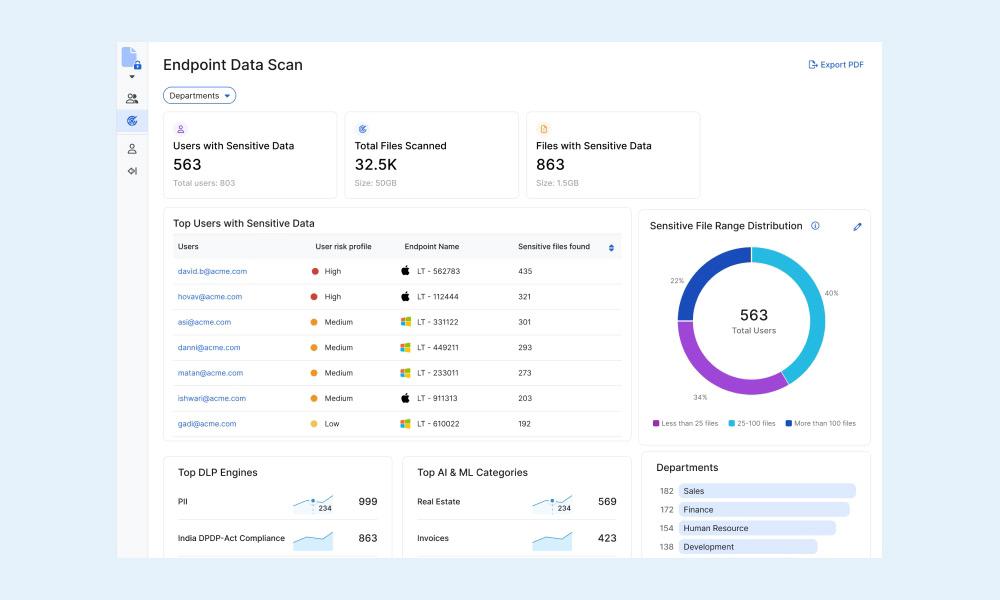
Classify sensitive data
Understand the types of data being stored, which region the data is in, who has access to it, and the level of risk associated with it.
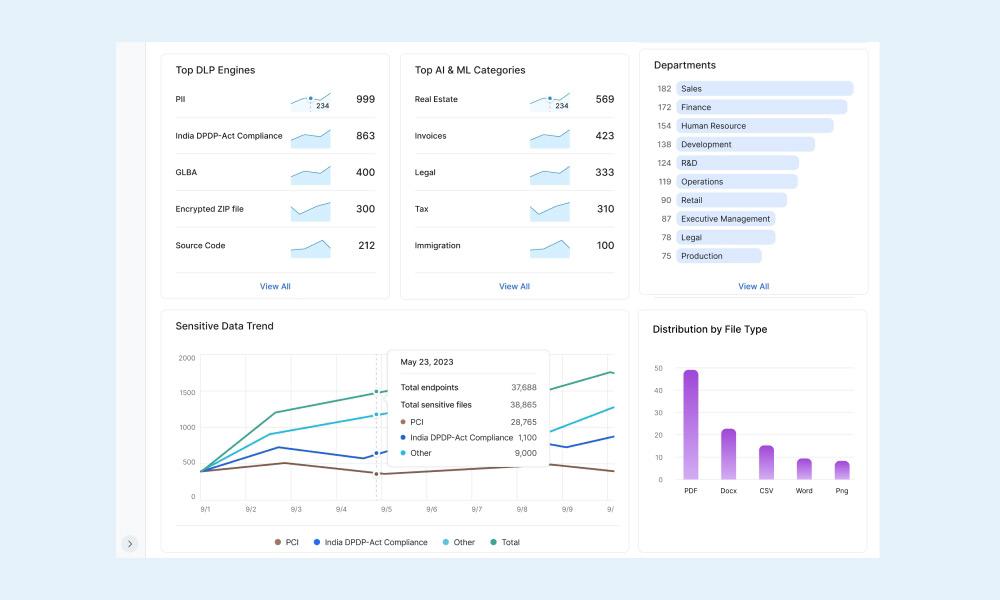
Monitor and enforce policy
Stay vigilant of all endpoint activity through one console. Apply a unified policy to monitor and protect data in motion and at rest.
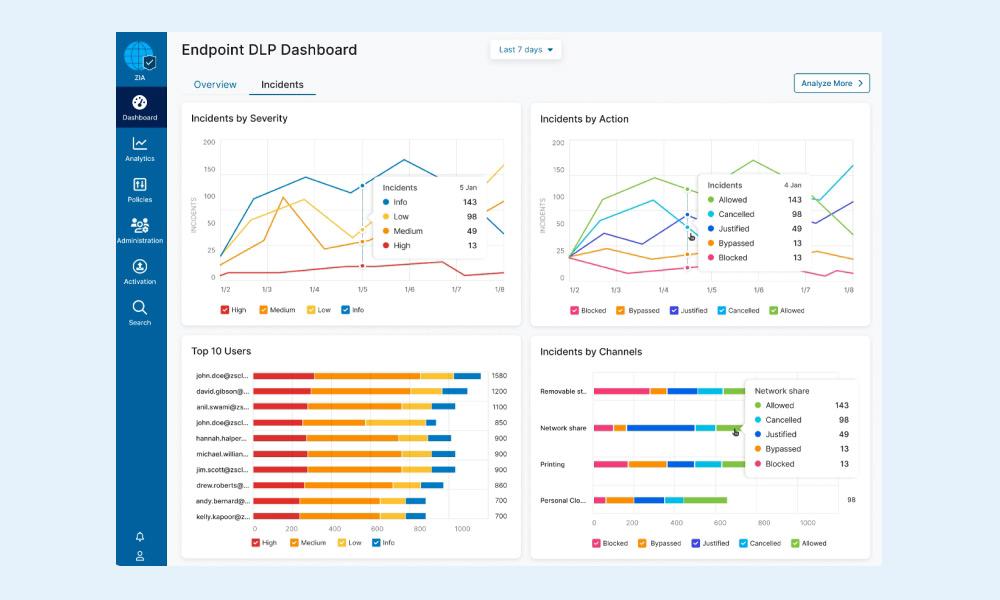
Automate remediation
Detect and prevent threats, policy violations, and data loss with AI-powered automation, freeing up your security staff.
Want to see Zscaler Data Security in Action?
Explore our interactive demo hub to see the powerful ways Zscaler can find and secure all types of data risks
Use Cases
Streamline and strengthen endpoint data security

Get rid of complicated point products and deliver data security from one unified strategy.

Track and consistently protect your most sensitive data in real time, no matter where or how it is accessed.

Secure the employee attrition process by stopping exfiltration of sensitive data to personal and removable storage.

Ensure regulatory compliance is maintained for required data and file types across your entire organization.
FAQ
Endpoint DLP solutions continuously monitor and protect sensitive data on endpoint devices (e.g., laptops, desktops, IoT, mobile devices), to prevent unauthorized sharing or exfiltration. By extending traditional DLP capabilities to individual devices, organizations can better safeguard sensitive files. Endpoint DLP can also detect and block risky user activity such as the transfer, upload, or printing of sensitive data.
Yes, modern endpoint DLP solutions use data classification techniques to identify sensitive information, such as credit card numbers, personally identifiable information (PII), or intellectual property. Advanced features include Exact Data Match (EDM) and trainable classifiers to detect custom data types and patterns relevant to the organization.
To evaluate if your endpoint DLP solution covers all connected devices, verify it tracks all endpoints, including laptops, desktops, mobile devices, and IoT assets, through centralized monitoring. Check for seamless integration with network systems and test its detection capabilities for sensitive files and risky user behavior. Conduct regular compliance audits and maintain up-to-date endpoint inventories to ensure full coverage.