
Prioritize Business-Critical Traffic with Bandwidth Control
Control bandwidth usage in the age of the cloud.


Ensure great user experiences for your essential applications
Don't let nonessential traffic like streaming video and social media slow down your critical applications. Enforce simple, powerful bandwidth control, delivered as a cloud service.

Prioritize business-critical applications

Improve the user experience for all apps

Reduce costs and simplify IT
The Problem
SaaS apps like Salesforce, Zoom, and Microsoft 365 are essential tools for daily productivity. Unfortunately, they often compete for bandwidth against users' personal and entertainment apps. And when critical apps slow down, so does your business.
To ensure fast user experiences, you need to ensure bandwidth priority for critical apps. You can deploy next-generation firewalls or UTM appliances at each site to route traffic and enforce bandwidth rules. However, managing these is complex and costly, and they scale poorly. They aren't designed for bandwidth shaping, and if there is a conflict, they drop data packets, hurting the user experience.

Solution Overview
Simplify bandwidth control by moving it to the cloud
Bandwidth Control empowers you to preserve quality of service for business-critical apps regardless of your maximum bandwidth. Part of Zscaler Internet Access™, Bandwidth Control lets you route traffic locally to the internet, apply flexible bandwidth management policies, and protect your users, no matter where they are.
Advanced functions like window shaping and bandwidth throttling help avoid packet dropping, providing a better user experience. And with enforcement delivered from the cloud, it eliminates bottlenecks and WAN latency while reducing costs compared to hardware-based solutions.

Enforce policies in the cloud, before the last mile

Get in-depth bandwidth visibility

Tailor granular policies to your business needs
Benefits
Optimize your traffic and your business

Prioritize business-critical applications
Limit the bandwidth impact of streaming, file sharing, and social media. Proactively identify bandwidth constraints and set granular policies for all users according to your business needs.

Ensure superior user experiences
Enable secure access to both business and personal apps, with local internet breakouts for faster access. Create a seamless user experience with advanced bandwidth control technology.

Reduce costs and simplify IT
Cut out the expense of buying and managing new hardware, reduce MPLS backhauling, and eliminate bottlenecks and WAN latency by enforcing policies in the cloud.
Solution Details
Fully cloud-delivered enforcement
Enforce bandwidth management policies across the organization without the need to deploy or manage hardware or software.

Granular policy settings
Create policies based on multiple parameters, including traffic type, location, time of day, file size, minimum and maximum bandwidth, and more.

Advanced bandwidth control
Provide a superior user experience with bandwidth control technologies including window shaping and bandwidth throttling.

The Zscaler Platform
The cybersecurity platform for the AI Age - built on Zero Trust to protect users, workloads, branches and devices through the world’s largest inline security cloud.
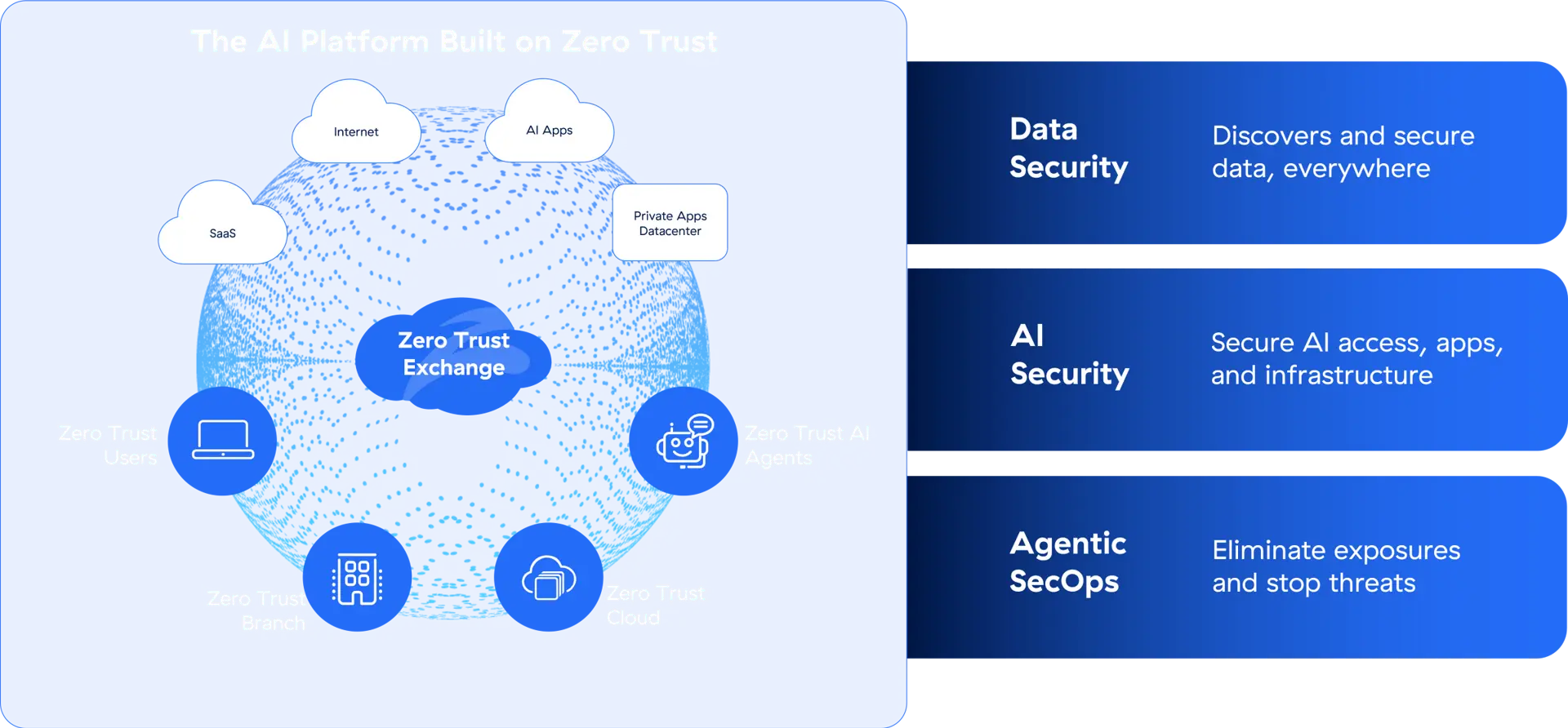
Data Security
Secure data everywhere, with comprehensive visibility and controls across all channels.
AI Security
Embrace AI with confidence using Zscaler AI Protect, a unified solution to secure AI at scale.
Agentic SecOps
Draw on insights from the world’s largest inline security cloud and third-party sources to assess risk and detect and contain breaches.
Customer Success Stories


DXC Technology gains bandwidth insights across all web traffic


NYC Department of Education keeps the focus on learning apps


Carlsberg Group keeps important traffic moving smoothly


